
2016 Historic West End Holiday Homes Tour
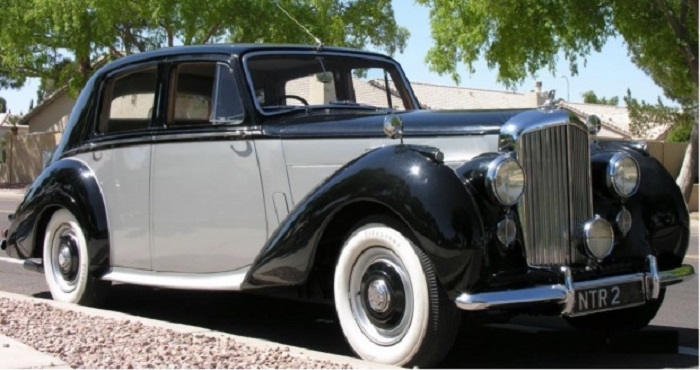
On December 11th from 1-5:00pm, Home Real Estate and the West End Association will host its biennial West End Holiday Homes Tour starting at St. Paul’s Church (520 Summit St). Vintage automobiles will roll through the streets this year, adding fantastic detail and paying tribute to this event’s historic significance.
Defined by its picturesque curvilinear streets and dramatically hilly topography, the West End neighborhood is home to a rich collection of architecture reflective of its late nineteenth-early twentieth century period of development as an urban streetcar suburb.
The Rosenbacher House (ca. 1909, 848 W. Fifth St), lofted high above the street and adorned by a terraced lawn and dramatic front porch with Grand Corinthian and Ionic columns, is considered one of Winston Salem’s grandest examples of Neo-Classical Revival architecture, and serves as a wonderful kick-off for this year’s tour.
Across the street stands the Brock-Horn-Maslin House (ca. 1890’s, 857 W. Fifth St), one of the West End’s most ornate Victorian dwellings. William Brock was one of many West End residents who witnessed the birth of this neighborhood. Little did he fathom upon stumbling into a dry goods store in downtown Winston Salem that the success he achieved there as a salesman would one day launch his career as owner of one of the largest candy manufacturers in the United States. Brock Candy Company is famous today for its introduction of the ever popular "gummy bear" in the 1980’s.
Two Colonial Revivals are next – the Thomas-Stultz House (ca. 1915, 1211 West Fourth St) and the Oscar P. Schaub House (ca. 1912, 1211 Forsyth St). Typical features of this style include a symmetrical front façade, accented doorway, evenly spaced windows, and columned porches. While both of these homes feature wraparound porches with Tuscan columns, each embodies a unique architectural and historical character from there. For example, in the 1940’S Marie Long listed 1211 Forsyth St as "Long’s Turkish Bath & Health Center." The home’s current owners wonder what exactly was involved with running a Turkish bath in the middle of the neighborhood in the 1940’s!
The Roberts-Lehman house (ca. 1911, 1110 West End Blvd) is a fine example of a Dutch Colonial Revival, a style known for having gambrel roofs with flared eaves extending over the long sides and resembling Dutch barns in construction. This home is perhaps the most distinctive example of a Dutch Colonial Revival in the West End, with its triple-gambrel roof featuring a front gambrel with diamond muntin upper sash matching the diamond muntin sidelights and transom of the glass and wood paneled entrance. Nearly lost to neglect by the year 2015, the tour’s next home is a typical early twentieth century cottage (ca. 1906, 125 Piedmont Ave), complete with a hipped and gabled roof, a right front projecting bay, and a porch across two thirds of the facade with turned posts and sawnwork brackets. This one-story dwelling was sheathed with asbestos shingles in the mid-twentieth century, and served as a rental home for many years until it became overgrown and run down. Today it has been given new life, and its lovely Victorian details shine once again!
A trip up the hill at 1215 Brookstown Ave reveals the low-slung Wyatt-Honeycutt bungalow (ca. 1924). A grand terraced lawn sloping steeply from the granite wall at the sidewalk contrasts the quiet splendor of this home. Recently converted from a duplex back to a fabulous single family home, this structure’s understated beauty is better understood once close enough to view the low hipped roof with overhanging eaves, gabled front dormer, and handsome porch with square posts on brick plinths. A stop at the corner of Northwest and Reynolda (ca. 1938, 1063 W. Northwest Blvd) introduces the offices of two young entrepreneurial West Enders who protected their daily earnings in the 1930’s – 1950’s with not only a combination lock protected safe, but also a deep walk-in vault at their burgeoning Quality Oil distributorship. Richly preserved details in this building include bathroom tile, hardwood floors, and knotty pine paneling.
The tour’s final stop, the Joseph L. Graham House (ca. 1910, 645 Summit St) is one of only a few Tudor Revivals in the West End. Emphasizing the simple and rustic aspects of Tudor architecture, this style leans more heavily towards modesty and "country cottage" than its more formal muse, the Tudor. Traffic manager for R.J. Reynolds and Vice President of the Board of Trade, Mr. Graham prided himself on living in the neighborhood’s largest and arguably finest example of Tudor Revival architecture.
Take a step back in time this December 11th to visit these historic homes that have been elegantly adorned with fresh greenery, family heirlooms and an abundance of charm and holiday cheer. Enjoy the notes of some of Winston Salem’s most talented musicians as they transport you to the turn of the century with traditional holiday classics. Let the West End open its doors to the past and tell you stories of the men and women who defined the earliest character of this streetcar neighborhood. See the homes they built and cars they may have driven, and experience firsthand the ways in which these impressive structures have been carefully preserved yet updated, and in many cases exquisitely resurrected to their original grandeur.
Tickets now available at Whole Foods (41 Miller St), 1502 Fabrics (936 Burke St), and online. Visit westendhomestour.com or Facebook for more information.