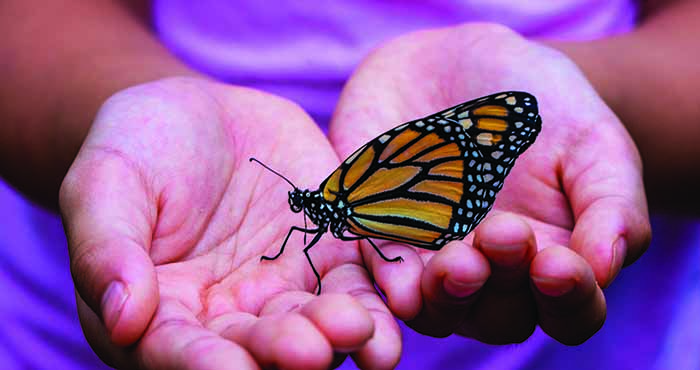
It’s something to see, and only a short, easy hike to get to: A kaleidoscope of Monarch butterflies gathered on trees and shrubs atop the Plateau of the Kings Mountain Gateway Trail. Brilliant orange, yellow, and black wings with tell–tale white spots perch on the Butterfly Garden pollinator plants as the group rests for nourishment and to lay caterpillar eggs on their 3,000–mile journey–and this is one of the only spots where you can see them.
In March and April, these butterflies are a part of a group of some 500,000 Monarchs that make the migration from the oyamel fir tree forests in the Mexican state of Michoacán to the northeastern United States and Canada. And come Fall, they’ll reverse their trek to escape the cold temperatures of the coming Winter.
The only species of butterfly to have a two–way migration, Monarchs are famous for this instinctual ritual that has them traveling between 80 to 120 nautical miles a day. They soar on warm–air currents, gliding and only flapping their wings to change direction or when the current dissipates. They’ll come together in large groups at night to roost, most often on tree trunks or branches.
Here in Cleveland County, a group of citizens wanted to ensure that the butterflies continued to have a safe, nourishing spot to stay on their journey. The Kings Mountain Gateway Trail planted a butterfly garden to create a respite for these migrating butterflies who fly through western North Carolina twice each year.
The 3.5–acre Plateau boasts large trees and milkweed plants where the mature butterflies will lay their eggs on the very flowering plant that will provide the caterpillars nourishment when they hatch. Butterfly Milkweed (Asclepias tuberosa) grows easily in western North Carolina and is known for its gorgeous orange flowers in the summer. The Monarchs lay their larva on the plant, and the larva in turn eat the leaves and store a poison called Cardia Glycosides. This poison is toxic to would–be predators like lizards, birds, and frogs.
The fluttering friends are also attracted to black eyed–susans, coneflowers, and other pollinator favorites gracing the meadow. The garden is part of The Butterfly Highway—a statewide conservation restoration initiative dedicated to restoring and maintaining native pollinator habitats impacted by urbanization. The Monarchs repay the favor by dropping excess nectar along their path, pollinating flowers and trees, ensuring that plants are able to thrive.
To view the garden, start at the Battleground Avenue trailhead, take the Rail Trail Loop to the Plateau Trail Loop. Approximately 1.5–miles one–way, this is an easy hike that leads you to the paved gravel path of the butterfly garden. You won’t mind the trek once you’re atop the plateau surrounded by blooms and butterflies. The best times to spy a bivouac of Monarch butterflies are late March and April in Spring and September and October in Fall. Be gentle should one land on you. It has a long road ahead of it.