Less than a decade ago, the economic malaise in Rocky Mount, N.C., was tangible. Rocky Mount Mills, a big cotton mill that had given the town its identity, had shut down in 1996, costing the area hundreds of jobs. Downtown was deserted. Nobody was hiring.
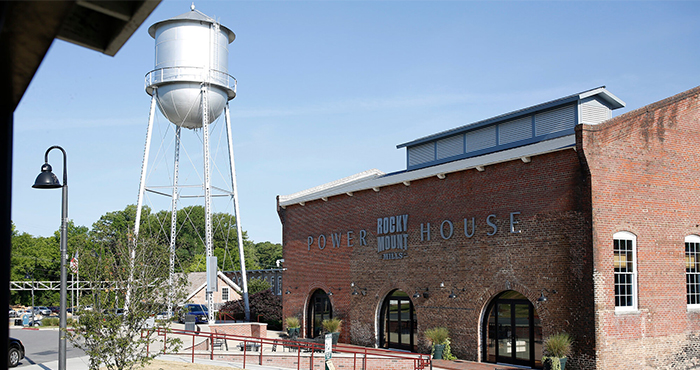
Now, the mill is a bustling complex with restaurants and breweries. It has a small hotel composed of tiny houses on wheels, a wide lawn where concerts regularly take place and a Wiffle ball field.
Since 2013, Rocky Mount Mills’ current owner, Capitol Broadcasting Company, has redeveloped the site, giving it a dynamic atmosphere with stores and residences. Its leaders are aiming to create a sense of community that will entice out-of-town businesses and workers to settle there, raising the town’s economic prospects and spurring more growth.
"We went through a really rough patch before they decided to invest in that project," said Rocky Mount’s mayor, Sandy Roberson.
Rocky Mount isn’t the only mill town in North Carolina trying to revitalize its economy. In High Point, Greensboro and Winston-Salem, a region known as the Piedmont Triad, other large factories that once served as economic engines providing many blue-collar jobs are being turned into vibrant mixed-use complexes for work and play. The projects have been designed to connect struggling regions to a new economy based on technology, information and innovation.
Now, with the rise of remote work, developers are betting that the factories’ beauty and sense of history, packaged with a roster of community activities, will give them a way to lure young talent. If workers are no longer tethered to their offices, they’re free to go anywhere — and it’s possible they will choose smaller cities with a higher quality of life.
Christopher Chung, the chief executive of the Economic Development Partnership of North Carolina, is optimistic. "A lot of these communities have the best chance they’ve had in a while to recruit individuals to take advantage of much more affordable housing prices and the other amenities that are there," he said. "This seems like a unique moment to realize the gains."
Renovating old, historic structures as a way to attract workers is a relatively new trend. These "adaptive reuse" projects can have a cachet that appeals to young professionals seeking not just functional workplaces but ones with a certain "cool" factor.
"What they have going for them is this authenticity of place, and the history and heritage surrounding that," Donald K. Carter, a senior research fellow at Carnegie Mellon University’s Remaking Cities Institute, said of industrial buildings from the 19th and early 20th centuries. As a result, he added, "almost every city is now looking at these buildings as real economic development assets."
That’s the thinking of the developers behind the North Carolina projects, but Rocky Mount Mills is arguably the most ambitious. The facility, a former cotton mill at a picturesque bend in the Tar River, is a vast building with high ceilings, original wood floors, tall windows and giant heart pine beams. Completed in 2019, it includes retail, office and residential space.
The developers aimed to create their own momentum. The mill property covers more than 150 acres and has four restaurants and four local breweries with taprooms. To help establish a community, Capitol Broadcasting bought and restored almost 70 original mill houses surrounding the campus.
"We knew we wanted to create a quality-of-life place that people wanted to be a part of," said Michael Goodmon, vice president of real estate for Capitol Broadcasting, which also owns WRAL-TV in Raleigh and the Durham Bulls minor-league baseball team, among other properties in the state.
The houses were snapped up almost instantly, and on weekends, the property almost feels like prepandemic times. But the office space is taking longer to fill; currently, it’s only 60 percent leased and lacks the kind of anchor tenants that Capitol Broadcasting had hoped to see.
But the developer sees opportunity in the remote-work models spawned by the pandemic. An hour’s drive to the west lies North Carolina’s Research Triangle, home to the University of North Carolina at Chapel Hill and Duke University. That region is booming and poised to grow more: Apple just announced plans to build a $1 billion campus. Some of those workers might prefer to live in a place like Rocky Mount, where housing and services are affordable and traffic is negligible.
"We’ve got lower-priced housing, food and beer, and kayaking on the river and hiking," Mr. Goodmon said. "With the growth and talent base coming out of the Triangle, areas like Rocky Mount will only feed on it."