When you think of summer, what comes to mind? Adventure? Fun? Ways to beat the heat? I’m sure we all have a story or two of how we spent our summers as a kid or even as an adult for that matter. These memories are exactly what gain when you visit Rockingham County.
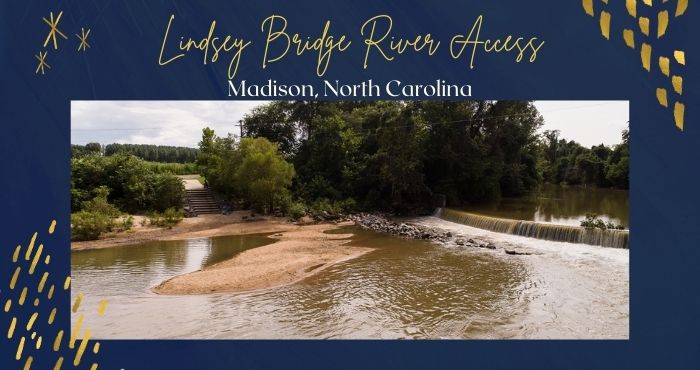
Rockingham County’s main attraction is our adventurous river system. Madison which is in the western part of the county, and specifically the Lindsey Bridge River Access, has always been a hub for water fun. Starting each spring, river goers flock to this area as it’s the perfect spot to start an afternoon float along the Dan.
In 2020 alone, this portion of the Dan River was host to over 5,000 tubers from various places, not just North Carolina. This stretch of river has always been a perfect mix of difficulty. As it’s popularity has grown, so has the need to expand the Lindsey Bridge Access, but budget restraints had yet to make this a possibility.
In 2017, it was discovered the dam, which was located just beside the access, was in extreme disrepair, and posed a catastrophic concern to the town’s water supply intake, which is just upstream from the dam.
Realizing traditional repair options would cost well over the town’s annual operating budget-officials began brainstorming about creative ways to solve the problem. They knew they needed an option that would continue to impound the water which would still allow the town’s drinking water to be pulled from it.
Around the same time the damage to the dam was identified, is was discovered that an endangered species that lived in the river was unable to swim upstream because of the dam. Once North Carolina Wildlife Resource Commission heard about the repairs that were needed, they approached the town to see if they could join efforts. It quickly seemed as though working together would be a win win for everyone.
In 1989 the Roanoke Logperch was federally listed as endangered. In 1992 a recovery plan was published and a search for additional populations was under way. In 2007 a robust population of Roanoke Logperch was discovered in the Mayo and Dan Rivers, just below the Lindsey Bridge dam.
Within North Carolina, the Roanoke Logperch naturally inhabit the Dan, Mayo, and Smith rivers, however, upstream range is inaccessible by the dams in the Dan and the Mayo Rivers. Removal of Lindsey Bridge dam will allow the fish to access up to an additional 50 miles of historical habitat.
A total of $3 million in grant funding and in kind donations was awarded for the project through the collaborative effort between the town of Madison, the North Carolina Wildlife Resources Commission, Dan River Basin Association, The U.S. Fish and Wildlife Service, Kriss Bass Engineering, LKC Engineering, The Conservation Fund Duke Energy, and the Rockingham County Education Foundation,
Everyone quickly began blueprinting a cost-effective and unique solution that worked for everyone. A historic "weir" design proved to be the solution this project needed to be successful and would be 1 of only 6 of its kind in the nation. This design basically builds a staircase from the dam down to the riverbed allowing the fish easily access to swim upstream.
Before heavy lifting for the project began, the delicate task of catching and relocating the precious species had to take place. Members of the N.C. Wildlife Resources Commission and the Dan River Basin Association took to the Mayo River, which intersects with the Dan River, to locate the Roanoke Logperch.
The hopes for this population is they will work their way up to the upper portion of the Dan River, where they will be able to mix with other populations of this species which in turn will allow the fish to be downlisted or d listed on the endangered species list.
Construction of the project officially began on September 14, 2020. The crews got to work quickly and by September 22nd the first weir was completed. By October 4th, the original dam was gone, and passage to the upper portion of the Dan River was officially opened; a portion of the river that has not been accessible for over 50 years.
The system’s stairway and pool design not only creates passage for the fish to survive and move upstream but also creates smooth rapids for kayaks, canoes, and tubes to travel on, which sets up a re-invented recreation hotspot for the county, and taking river tourism in Rockingham County to the next level. The rendering here shows a vision of the park which looks nothing less than amazing!
The economic impact this project is projected to have estimates as high as a quarter million visitor’s annually. Madison’s perfectly positioned location, just off of interstate 73, makes it an ideal daycation from anywhere in North Carolina, but especially for the piedmont and triangle regions.
Whitewater tubing, rafting, kayaking, or canoeing are very popular recreational sports that can’t just be experienced anywhere. Conditions have to be just right with gradient changes enough to generate so much turbulence that air is trapped within the water. The rapids at the new whitewater park in Madison will be on the calmer side, labeling them a family friendly experience.
Each weir will offer it’s own unique white water experience with variations in boulder placement, underwater pool depths, and elevation drops. The one thing that will not be unique to each weir is the amount of fun and excitement one will experience as you coast along the frothy waters.
The new whitewater park will open to the public in May of this year and will provide an adventurous experience to everyone. There will be an access just after the 7th weir that will allow visitors the opportunity to exit the river to a trail that will lead them back to the beginning to do it all again.
All 7 weirs are currently in place but much work is still to be done over the next few months. The ample parking, observation plazas, open air pavilions, beach areas, and handicap accessible ramps for river goers are to follow in the coming months.
The official ribbon cutting for the park will be Friday, May 21st and will serve as the official grand opening for the park’s inaugural season.